

In the last year, my side business made six figures while I worked full time as a nurse and raised two toddlers.

This was early in 2026, this year my total revenue is now up $177,805.93
I want to be honest about how unglamorous the start was. My parents discouraged me from writing as a career, so I started Nursing Flowsheet as a place to write anyway and to teach myself about money. For a long time it was a hobby. Three years ago I realized it could be a real business. It was when one of the nurses who has followed me for years asked me “Hey can you teach me? I will pay you!”
That’s when I realized that this hobby of mine could turn into an actual business.
This post covers every step I took, including the ones I got wrong. It also covers what most side hustle posts skip: your employer’s moonlighting policy, your nursing license, and the tax bill that shows up in April.
Before you start: the honest math
A side hustle costs time and money before it pays you anything. Go in knowing the numbers.
Time. Plan on 5 to 10 hours a week for the first year. On a three-shift week, that might mean two evenings and part of a day off. If you have kids, be realistic about which evenings actually exist. For me, I work 4 days a week, so that one day off during the week day is my “side hustle day”, this is the time I write content, film, work on partnerships, create digital products etc.
Money. You will likely spend before you earn. My platform alone runs over $200 a month, and I hesitated to pay it because I hadn’t made a dollar yet. A lean start can cost under $50 a month. A comfortable one runs $150 to $300.
Expectations. There will be a stretch where the work feels heavy and the sales are small. Decide now that small numbers early are data, and keep going long enough to read them.
Step 1: Start with what you already know
You need to be known for one thing before anyone will pay you for it. Nurses are experts in more areas than we give ourselves credit for, and most of us undersell it.
Ask yourself:
- Have you figured out how to survive night shift without wrecking your sleep?
- Are you the preceptor new grads request by name?
- Did you pass a certification exam other nurses dread?
- Did you pay off student loans, start investing, or build savings on a nurse’s paycheck?
- Did you leave the bedside for a remote or specialty role people keep asking you about?
Try this exercise. Write down every question a coworker, friend, or stranger online has asked you in the last six months. Aim for 20. Circle the questions that came up more than once. Those repeats are your topic.
The people asking those questions are your ideal customers. Picture one of them specifically: a two-years-in med-surg nurse with $60,000 in loans, for example. Write every post and build every product for that person. I did for many years and I have that person in mind every time I make content online.
Step 2: Choose how you’ll get paid
Pick one model to start. Running two at once on a nurse’s schedule is how people burn out by spring.
| Model | What you sell | Time before first dollar | Good fit if you |
|---|---|---|---|
| Coaching or mentoring | 1:1 or small-group calls | Days to weeks | Want income fast and like talking to people |
| Digital download | Templates, study guides, planners, spreadsheets | Weeks | Like making tools more than teaching |
| Online course or workshop | Recorded lessons on one outcome | 1 to 3 months | Can teach a process step by step |
| Membership or community | Ongoing access, Q&A, accountability | 1 to 3 months | Enjoy showing up for the same people every month |
| Content + affiliates and brand deals | Blog posts, videos, sponsored content | 6 to 12 months | Like creating content and can wait for an audience |
| Freelance nursing skills | Health writing, content review, legal nurse consulting | Weeks | Want to sell hours without building an audience |
Coaching pays fastest and scales worst, since every dollar costs you an hour. A course takes longer to build and then sells while you’re at work. My signature course, Employ Your Money (no longer available for enrollment), teaches nurses to invest, and it still sells long after I recorded it. It took me months to build it.
Personally, I prefer to teach a mass audience and help a lot of nurses all at once so my model for my business is a mix of digital downloads and online courses/workshops.
Many people start with coaching, notice which questions every client asks, and turn those answers into a course. That order saves you from building a product nobody wanted.
Step 3: Prove people want it before you build it
The most expensive mistake is spending three months on a course and launching to silence. You can test demand in a week or two.
- Talk to ten people. Message nurses who fit your ideal customer and ask what they’ve already tried to solve this problem. Listen for the words they use. Those words become your sales page.
- Post about the problem. Share one piece of content on the topic and watch the replies and saves. A post that gets DMs asking “how?” tells you more than one that gets likes.
- Open a waitlist. Put up a one-page form describing the offer. If 50 people see it and nobody signs up, change the offer before you build anything.
- Pre-sell it. Offer a founding price to the first five buyers, then build the product with them. Money in hand is the only validation that counts.
If the test flops, you lost two weeks instead of three months. Usually the promise was too vague. Sharpen it and test again.
Step 4: Package the offer and price it
A good offer solves one specific problem for one specific group of people. It works like a care plan: a named problem and a measurable goal.
Fill in this sentence before you build anything:
I help [who] go from [where they are now] to [specific result] in [timeframe].
Example: I help new grad nurses go from zero retirement savings to a fully set-up 403(b) and Roth IRA in 30 days.
If you can’t fill it in, the offer is still too fuzzy to sell.
Pricing. Nurses tend to underprice because we’re used to giving help for free. Some common starting ranges:
| Offer type | Typical starting price |
|---|---|
| Template or digital download | $17 to $47 |
| Mini course or workshop | $47 to $197 |
| Signature course | $197 to $997 |
| Group coaching program | $300 to $1,500 |
| 1:1 coaching session | $100 to $300 per hour |
Set the price based on what the result is worth to the buyer. If your course helps a nurse capture an employer match she was leaving on the table, that’s worth thousands a year to her. A $297 price is fair for that.
For me, when I price my products, I look at the value I create for my buyers. I look at the time they will save and the convenience. I also will have a “hunch” if I feel like underpricing or overpricing. My signature course when I launched it initially was priced at $777 and i had 18 students sign up right away.
Step 5: Use simple tools and stop fiddling with them
This is where I lost the most time. I poured time into my website design before I had anything to sell, and I switched platforms more than once because each one did only part of what I needed. I have tried multiple platforms before… like I used to have different one for different purposes. The newsletter was at convertkit, the course was on Teachable, the landing pages were on wordpress. So I decided to just put them all in ONE place.
What you actually need at the start:
- A place to host and deliver the product
- A way to take payments
- An email tool to stay in touch with your list
- One simple page that explains the offer
I eventually settled on Kajabi because it does all four in one login. I build my website, host my course, send my emails and automations, and take payments there. I also design everything on my site myself, with no developer.
I’ll be straight about the cost. I pay over $200 a month for it, and I hesitated for a long time because I wasn’t making any money yet. That hesitation is normal. You will have to spend some money to make money, and the question is how much and when.
Right now Kajabi has a deal for 3 months at $99. If you already know your topic and plan to launch within 90 days, that window covers your first launch.
If you aren’t ready to pay for a platform, start with a free email tool and a payment link from Stripe or PayPal. Sell your first offer that way. Move to an all-in-one platform once the tech starts slowing you down.
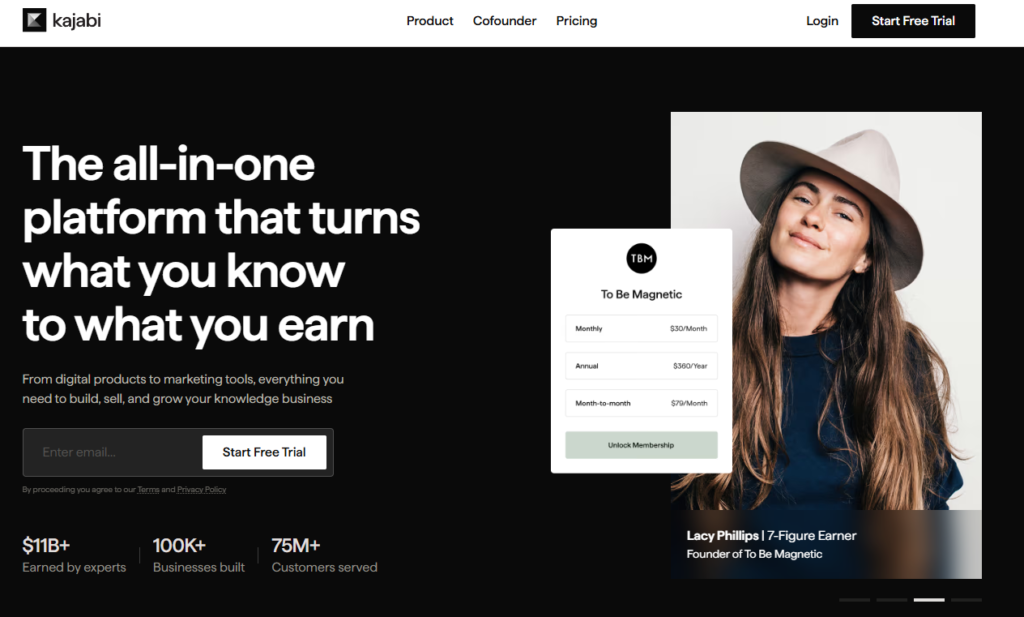
Disclosure: the Kajabi link in this post is an affiliate link. If you sign up through it, I earn a commission at no extra cost to you.
Step 6: Build an email list from day one
Your email list is the only audience you own. Instagram can change its algorithm overnight or lock your account, and your followers go with it. Your email list stays with you.
Start collecting emails before you have a product:
- Make a free lead magnet. Give away something small that solves a slice of the problem your paid offer solves. Mine is a free Coast FI calculator for nurses. A one-page checklist works fine like my investment cheat sheet.
- Put the signup everywhere. Link it in your bio and at the end of every post.
- Email every week. Send one useful email on the same day each week. Most people unsubscribe from lists that only show up to sell.
- Pick one content platform. Show up on it consistently for six months before adding a second. I run Instagram, TikTok, YouTube, and the blog now, but I started with the blog. I only had a few subscribers initially. 8 years later, I have more than 15,000+ nurses in my email list. (and this is with consistent email clean ups too!)
Size matters less than you think. A few hundred engaged nurses who opened your emails for months can fill a first launch.
Step 7: Launch before you feel ready
You will never feel ready. Waiting until everything is perfect is the most common reason a good product never launches. Pick a date and put it on your calendar.
A simple four-week launch plan:
| Week | What you do |
|---|---|
| Week 1 | Finish the outline and the sales page. Announce that something is coming. |
| Week 2 | Share content on the problem your offer solves. Open the waitlist. |
| Week 3 | Teach something useful live or by email, then open the cart with a founding price. |
| Week 4 | Answer objections by email, send a last-call reminder, and close the cart. |
Your first launch only has to show you what’s possible. Mine made close to $20,000, and I couldn’t believe it.
After the cart closes, write down which emails got opened and the questions buyers asked. That record makes your second launch easier.
Step 8: Protect your license and plan for taxes
Your nursing license is worth more than any side business. These are the steps I’d want a friend to take before their first sale. I’m not a lawyer or a CPA, so confirm the details for your state and situation.
Read your employer’s policies. Search your employee handbook for “outside employment” and “conflict of interest.” Some employers require you to disclose outside work. Most prohibit using their name or logo in your business. Don’t film in your unit or wear a badge on camera.
Keep patients out of it. Never share a patient story with details someone could identify, even years later. HIPAA applies to your posts. If you change enough details to protect privacy, say the story is a composite.
Stay in your lane on advice. General health education is fine. Diagnosing a stranger in your DMs puts your license at risk. Add a disclaimer to your site and products. If you teach money, as I do, make clear it’s education and not individual financial advice.
Disclose affiliate links and brand deals. The FTC requires a clear disclosure whenever you earn money from a recommendation.
Set up the business side.
- Open a separate bank account for business income and expenses. It makes tax time far easier.
- Many people start as a sole proprietor and form an LLC once income grows. In California, an LLC owes at least $800 a year in franchise tax, so weigh that before forming one early.
- Track expenses that may be deductible, such as your platform subscription and the camera you film on.
- If you have an LLC, you can also elect to have an Scorp
- I have a tax preparer for my business and I also use Collective.
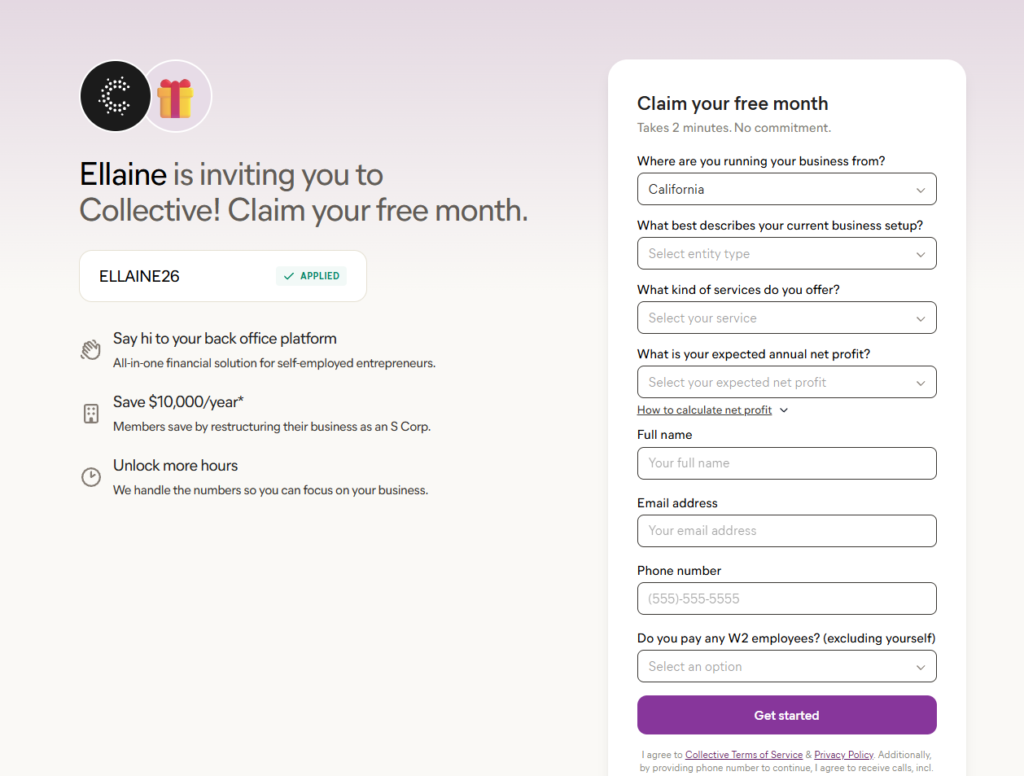
Set aside money for taxes. This one surprises nurses the most. Your hospital withholds taxes from your paycheck, but nobody withholds from side income. On top of income tax, you owe self-employment tax of 15.3% on net self-employment earnings. A common rule of thumb is to set aside 25% to 30% of profit. Once you expect to owe $1,000 or more, the IRS expects quarterly estimated payments, generally due in April, June, September, and January. A CPA can tell you whether to raise your W-2 withholding instead.
Step 9: Keep showing up after a launch flops
Nurses message me asking how I got here. The unpolished answer is that I didn’t build Nursing Flowsheet overnight, and some of my launches have failed. There was one time I launched and i only got one student to enroll. I made $87 for that launch.
When a launch flops, look at where people dropped off before you decide the idea was bad:
- Few people saw it. You have an audience problem. Spend the next few months growing your list.
- People saw it and didn’t click. The promise didn’t land. Rewrite the headline and the outcome sentence from Step 4.
- People clicked and didn’t buy. Your sales page probably didn’t answer their real objection. Email a few people who clicked and ask what stopped them.
Business is a skill, the same way starting an IV was once a skill you hadn’t learned. Every launch teaches you something you can only learn by launching.
You already have what it takes to start
You don’t need another degree to build a six-figure side business as a nurse. You need one problem you know how to solve and a simple way to sell the solution. The belief that you’re allowed to charge for it usually shows up after the first sale.
If you’ve been waiting for permission, take this as yours. Pick your topic this week and talk to ten nurses about it.
And whatever stage you’re at, give yourself credit. Writing down your 20 questions counts. Opening a waitlist counts. You spend your shifts helping other people heal, and you deserve to build something that changes your own life too.
LEARN MORE ABOUT SIDE HUSTLES HERE.
Now it’s time to build something that changes your life, too.


[…] are a lot of businesses that you can start as a nurse, maybe you start a wellness business, create digital products, teach CPR classes, or monetize your expertise online. This route lets you retire from traditional […]